
Body Measurement Calculator Guide: BMI, Body Fat, Ideal Weight & Health Metrics
Introduction
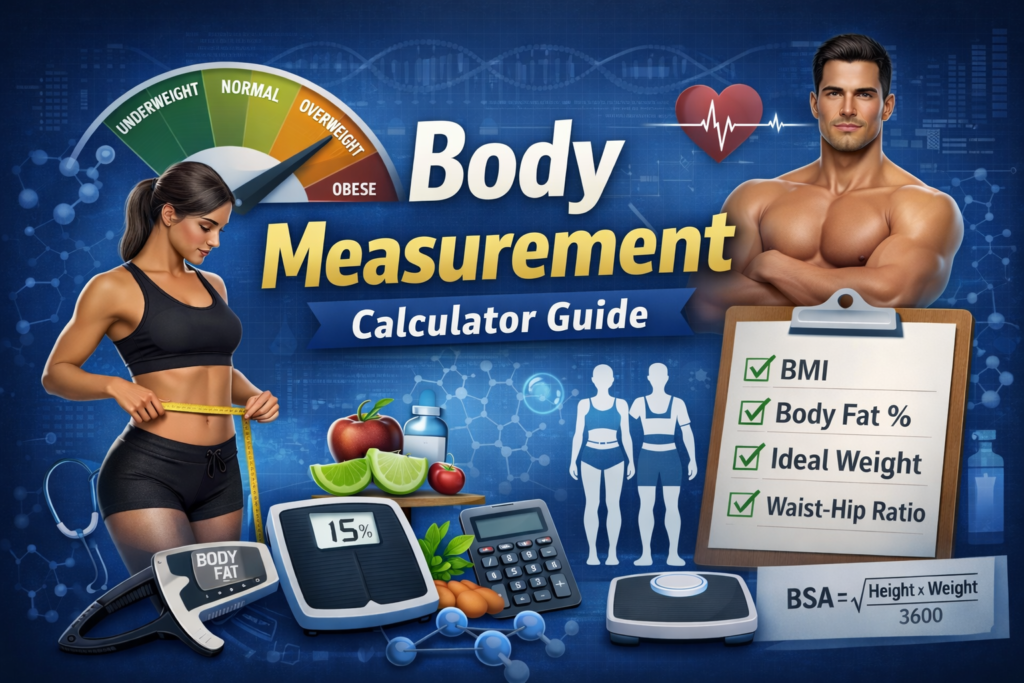
Body measurement calculators are widely used tools that help individuals understand their physical health, body composition, and potential health risks. These calculators transform basic inputs such as height, weight, waist size, and hip circumference into meaningful metrics that provide insights into overall wellness.
Rather than relying only on body weight, modern health assessments focus on multiple indicators that reflect body fat distribution, muscle mass, metabolic health, and cardiovascular risk. By analyzing these measurements together, individuals can gain a more accurate understanding of their physical condition and set realistic fitness or weight-management goals.
In this guide, we explore the most common body measurement calculators, how each metric is calculated, and what message each measurement reveals about your health.
Why Body Measurement Calculators Matter
Many people evaluate their health based solely on weight. However, body weight alone cannot determine whether the weight comes from fat, muscle, or water retention. Two individuals with the same weight may have completely different body compositions and health risks.
Body measurement calculators solve this problem by converting physical measurements into standardized health indicators. These indicators help identify obesity risk, fat distribution patterns, muscle mass levels, and healthy weight ranges.
Fitness professionals, doctors, nutritionists, and athletes often rely on these metrics to assess physical health and track progress during weight loss or training programs.
Body Mass Index (BMI) Calculator
The Body Mass Index (BMI) is one of the most widely used health metrics in the world. It estimates whether a person’s weight falls within a healthy range relative to their height.
BMI is calculated using the following formula:
Weight (kg) divided by Height (m²)
This calculation produces a number that categorizes individuals into weight classifications such as underweight, normal weight, overweight, or obese.
BMI ranges are typically interpreted as follows:
- Underweight: BMI below 18.5
- Normal weight: BMI 18.5 – 24.9
- Overweight: BMI 25 – 29.9
- Obese: BMI 30 and above
Although BMI is easy to calculate and widely used in healthcare screening, it does not distinguish between muscle mass and body fat. For example, athletes with high muscle mass may have a high BMI despite having low body fat.
Despite this limitation, BMI provides a useful first-level indicator of potential health risks such as cardiovascular disease, diabetes, and metabolic disorders.
<18.5
18.5–24.9
25–29.9
30+
Body Fat Percentage Calculator
While BMI evaluates weight relative to height, body fat percentage measures how much of the body is composed of fat compared to lean tissue.
Body fat percentage can be estimated using circumference measurements such as waist, neck, hips, and height. A common method used in fitness assessments is the U.S. Navy formula, which calculates body fat based on these measurements.
For men, the calculation typically uses neck and waist measurements, while for women it includes hips as well.
- Body fat percentage categories generally include:
- Essential fat: required for normal body function
- Fitness level: common among athletes
- Average range: typical for general population
- Obese range: associated with increased health risks
This metric provides a clearer picture of body composition than BMI because it distinguishes between fat and muscle mass.
Lean Body Mass Calculator
Lean Body Mass represents the total weight of everything in the body except fat. This includes muscles, bones, organs, and body fluids.
Lean body mass is calculated by subtracting body fat mass from total body weight.
Lean Body Mass = Total Weight − Body Fat Mass
This metric is particularly useful for athletes, bodybuilders, and individuals following strength training programs because it highlights muscle development and metabolic activity.
Higher lean body mass often corresponds with higher metabolism and better physical performance.
Fat Mass = Total Body Weight × (Body Fat % ÷ 100)
Waist-to-Hip Ratio Calculator
The Waist-to-Hip Ratio (WHR) measures fat distribution in the body. It compares waist circumference with hip circumference to determine whether fat is stored more around the abdomen or the hips.
The formula is:
Waist-to-Hip Ratio = Waist Circumference ÷ Hip Circumference
A higher ratio indicates greater abdominal fat accumulation, which is associated with higher risks of heart disease, diabetes, and metabolic syndrome.
Health organizations generally interpret WHR as:
For men:
- Low risk: below 0.90
- Moderate risk: 0.90 – 0.99
- High risk: above 1.00
For women:
- Low risk: below 0.80
- Moderate risk: 0.80 – 0.84
- High risk: above 0.85
This measurement provides important insights into cardiovascular health risk.
Waist-to-Height Ratio Calculator
The Waist-to-Height Ratio is another metric used to assess fat distribution and metabolic health. It compares waist circumference to height.
The formula is:
Waist-to-Height Ratio = Waist Circumference ÷ Height
Research suggests that waist circumference should generally be less than half of a person’s height.
For example, if someone is 170 cm tall, a waist circumference above 85 cm may indicate increased health risk.
This metric is considered a strong predictor of cardiovascular risk and is often more accurate than BMI in identifying obesity-related health issues.
Body Surface Area Calculator
Body Surface Area (BSA) measures the total surface area of the human body. It is often used in medical settings to determine medication dosages, metabolic rate calculations, and physiological measurements.
A common formula used is the Mosteller formula:
BSA = √((Height × Weight) ÷ 3600)
Although BSA is primarily used in medical contexts rather than fitness, it provides valuable information about metabolic activity and physiological scaling.
What These Metrics Reveal About Your Health
Each body measurement calculator provides a different perspective on physical health. BMI gives a general overview of weight relative to height, while body fat percentage reveals the composition of body tissue. Lean body mass highlights muscle development, and waist-based ratios indicate fat distribution and cardiovascular risk.
When used together, these metrics provide a comprehensive understanding of health status. For example, someone may have a normal BMI but still have a high waist-to-hip ratio, indicating hidden metabolic risk. Conversely, a strength athlete may have a high BMI but low body fat percentage, indicating excellent physical condition.
Understanding these measurements allows individuals to monitor health trends, adjust nutrition and training plans, and maintain long-term wellness.
Body measurement calculators transform simple physical measurements into meaningful health insights. Tools such as BMI, body fat percentage, lean body mass, waist-to-hip ratio, and ideal body weight help individuals better understand their body composition and health risks.
While no single measurement provides a complete health assessment, combining several metrics offers a more accurate picture of overall fitness and well-being. Regularly tracking these measurements can help guide healthier lifestyle choices and support long-term fitness goals.
Using reliable body measurement calculators is an effective way to monitor progress, maintain a balanced physique, and stay informed about personal health.