
A moving checklist is the difference between a smooth move and a chaotic, stressful scramble. Moving home involves dozens of small tasks spread over weeks, from giving notice to transferring utilities, and forgetting any one of them can cause real headaches. So a single organised list is essential.
This free template breaks the move into tasks, each with a timeframe, an owner and a due date. So it counts down to every deadline and tracks your progress. As a result, the right things happen at the right time, and moving day arrives without nasty surprises.
What does the moving checklist include?
The template is one task list feeding a clear dashboard. Dropdowns keep categories and timeframes tidy. In short, you get the following:
- A task listwith the task, category, timeframe, owner, due date, status, days left and notes.
- An automatic Days Leftcountdown that clears once a task is done.
- Drop-down lists for category, timeframe and status, so entries stay consistent.
- An owner column, so you and anyone helping know who is doing what.
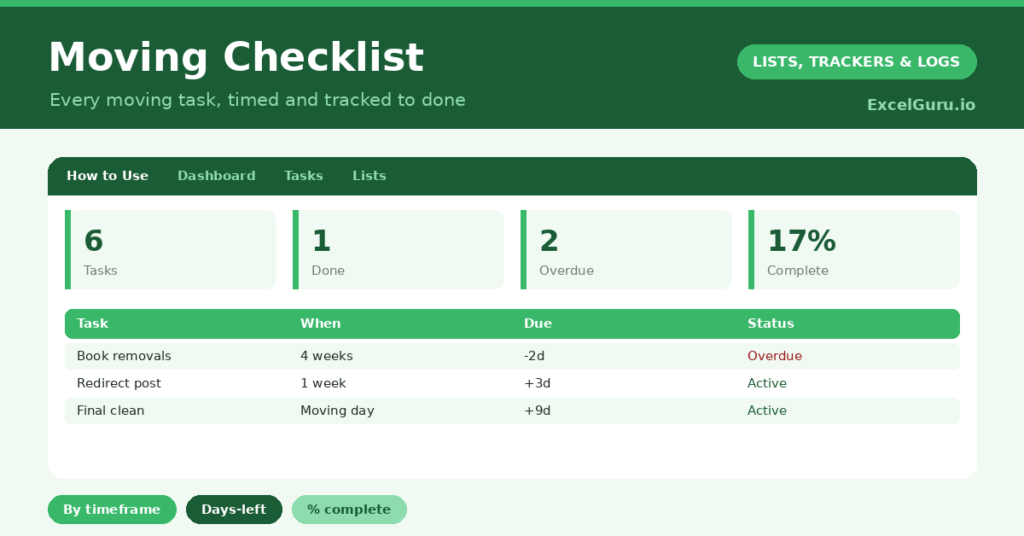
- A dashboardshowing total tasks, those done, those to do, overdue tasks, tasks due within seven days and your percent complete.
Which formulas power the moving checklist?
The dashboard turns your list into a plan. The Days Left column is =IF(OR(Due=””, Status=”Done”), “”, Due – TODAY()), so it counts down to each task and blanks out once it is finished.
A SUMPRODUCT flags overdue tasks, and another counts those due within the next week, which is your near-term focus. The percent-complete figure is =COUNTIF(Status, “Done”) / COUNTA(tasks), so you watch a single, satisfying number climb toward moving day. So the dashboard always shows what is pressing and how far you have come.
Why use a moving checklist?
Moving is stressful largely because there is so much to remember. A checklist hands that mental load to the spreadsheet. So you stop lying awake wondering whether you cancelled the broadband.
The timeframes are the clever part, because many moving tasks must happen weeks ahead. By grouping tasks into windows like eight weeks out and one week out, the list makes sure nothing is left too late. The owner column then shares the work fairly between everyone involved. Furthermore, the percent-complete figure gives a reassuring sense of progress. In short, the checklist replaces moving-day panic with calm control.
What does the dashboard reveal?
The dashboard answers the only question that matters during a move: am I on track? The overdue count is the first thing to check, since those tasks need attention now. The due-within-seven-days count is your immediate to-do list.
The percent-complete figure is genuinely motivating, turning a daunting move into a number that steadily rises. The to-do count shows how much still lies ahead, so you can pace yourself. Because it all updates automatically, a glance tells you whether the move is under control. So the dashboard keeps a stressful process feeling manageable.
How do you use it?
Start as early as you can by listing every task you can think of, each with a sensible timeframe. So the whole move is mapped from the outset. Set due dates, and assign owners if others are helping.
Then work through the list, updating the status as you go and adding tasks as they occur to you. Check the dashboard regularly, clearing overdue and due-soon items first. Because the timeframes keep early tasks visible, nothing important gets left to the last minute. In short, starting early and updating often is the whole secret to a calm move.
How do you customise it?
Edit the categories, timeframes and statuses on the Lists tab to match your move, adding an *International* timeframe if you are moving abroad. Additionally, you can add columns for the cost of a task, a supplier’s phone number, or which box a task relates to. A column for change-of-address notifications is handy. The template suits a simple local move or a complex long-distance one.
What mistakes should you avoid?
The first mistake is starting too late, which is how tasks pile up into moving-day chaos. So begin the list as soon as the move is confirmed. The second mistake is forgetting the easily missed admin tasks, like redirecting post or updating your address.
Capture those early, since they have real deadlines. Finally, do not leave tasks unassigned if others are helping. A clear owner means a task actually gets done, rather than everyone assuming someone else has it. Shared ownership tends to mean no ownership at all.
Frequently asked questions
How far ahead should I start the moving checklist?
As early as possible, ideally six to eight weeks before. Many tasks, like giving notice and booking removals, have long lead times, and the timeframe column keeps those early jobs visible.
Can my family share the checklist?
Yes. Keep the file in a shared location and assign each task an owner. Everyone then sees the same live list of what is done and what still needs doing.
Does it show how close I am to ready?
Yes. A percent-complete figure on the dashboard rises as you finish tasks, so you always have a clear, reassuring sense of how ready you are for moving day.
List every task early, set timeframes and owners, and update your progress as you go. The dashboard then keeps overdue and upcoming tasks in view. A moving checklist will not pack the boxes for you, yet it turns the stressful chaos of moving home into a calm, ordered countdown to the big day.