
A home maintenance schedule is the cheapest insurance a homeowner can buy. The big, expensive repairs almost always begin as small jobs that were quietly forgotten. A blocked gutter becomes water damage, and an unserviced boiler becomes a winter emergency.
This free template lists every upkeep task, how often it needs doing, and when you last did it. So it works out the next due date and flags anything slipping. As a result, routine care happens on schedule, and small jobs never grow into costly ones.
What does the home maintenance schedule include?
The template is one task list feeding a clear dashboard. Dropdowns keep the areas and frequencies tidy. In short, you get the following:
- A task schedule with the task, area, frequency, last-done date, next-due date, status and estimated cost.
- An automatic Next Due date and a color-coded status for every task.
- Drop-down lists for area and frequency, so entries stay consistent.
- A notes column for details, such as which filter or which contractor.
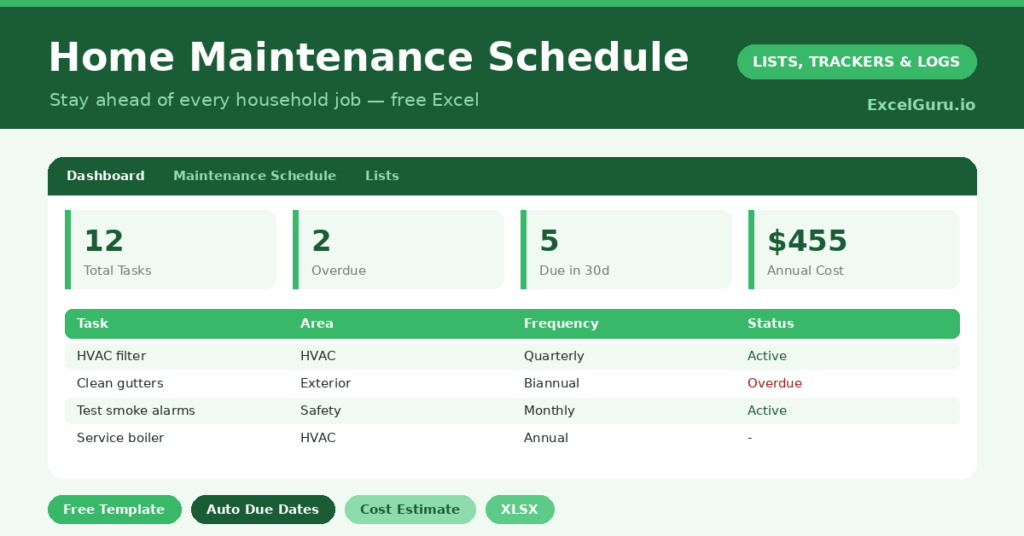
- A dashboard showing total tasks, overdue, due soon, on track, the total estimated cost and your annual jobs.
How does the home maintenance schedule calculate due dates?
Each frequency maps to a number of days on a small lookup table. So monthly, quarterly, biannual and annual each carry their own value. The Next Due date is then =Last Done + VLOOKUP(Frequency, table, 2, FALSE).
An annual task therefore falls due a year after you last did it, and a quarterly one in three months. A nested IF labels each task Overdue, Due Soon or On Track, using a 30-day window, and colors it accordingly. On the dashboard, COUNTIF totals each status. So one glance tells you exactly what the house needs this month.
Why keep a home maintenance schedule?
Homes demand constant, varied upkeep, and it is impossible to hold it all in your head. A schedule remembers for you. So the jobs with no obvious trigger, like testing smoke alarms or bleeding radiators, actually get done.
The financial case is the strongest of all. Preventive maintenance is a fraction of the cost of the repairs it avoids. So servicing the boiler beats replacing it, and clearing the gutters beats fixing a damp wall. The estimated-cost column even helps you budget for the year. In short, the schedule protects both your home and your wallet.
What does the dashboard reveal?
The dashboard turns the schedule into a simple action list. The overdue count is the figure to watch, since those tasks need attention now. The due-soon count then warns you what is coming in the next month.
The on-track count is quietly reassuring, showing how much of your home care is under control. The total estimated cost helps you plan financially, gathering the year’s jobs into one figure. Because the statuses update daily, you never have to inspect the whole house to know what needs doing. So the dashboard keeps upkeep proactive.
How do you set it up?
List your home’s regular tasks, from gutter clearing to boiler servicing, and set a sensible frequency for each. So the schedule reflects how your home actually works. Enter the date you last did each task, and the next-due date appears.
After that, the only habit is to update the last-done date each time you complete a job. The status then resets and the countdown begins again. Add an estimated cost where you can, which builds the budgeting picture. A few minutes of setup buys a year of organised, worry-free upkeep.
How do you customize it?
Edit the areas and frequencies on the Lists tab to match your property, whether that is a flat, a house or one with a garden. Additionally, you can add columns for the contractor’s contact details or the last cost paid. Seasonal tasks fit neatly too, since you can set a frequency that lands them at the right time of year. The template bends to any home.
What mistakes should you avoid?
The first mistake is building an over-ambitious schedule you cannot keep. So set realistic frequencies, because a task done reliably beats a perfect plan you ignore. The second mistake is forgetting to update the last-done dates, which freezes the whole schedule.
Finally, do not log only the big jobs. It is the small, regular tasks that prevent the expensive failures, so include them all. A schedule that captures the little things is exactly what keeps the big things from ever happening.
Frequently asked questions
How does the home maintenance schedule know what is due?
Each task’s frequency maps to a number of days. The next-due date adds that to the last-done date with a VLOOKUP, and a status flag shows whether the task is on track, due soon or overdue.
Can I budget for upkeep with it?
Yes. Each task has an estimated cost, and the dashboard sums them into a total. That gives you a realistic figure for the year’s home maintenance, so the costs never catch you by surprise.
Does it handle seasonal tasks?
It does. Set a frequency that lands a task at the right time, such as annual gutter clearing before autumn. The next-due date then prompts you in good time, every year.
List your tasks, set their frequencies, and keep the dates current. The dashboard then tells you exactly what your home needs this month. A home maintenance schedule is a small habit, yet it quietly saves you from the expensive, stressful repairs that catch unprepared homeowners out.