
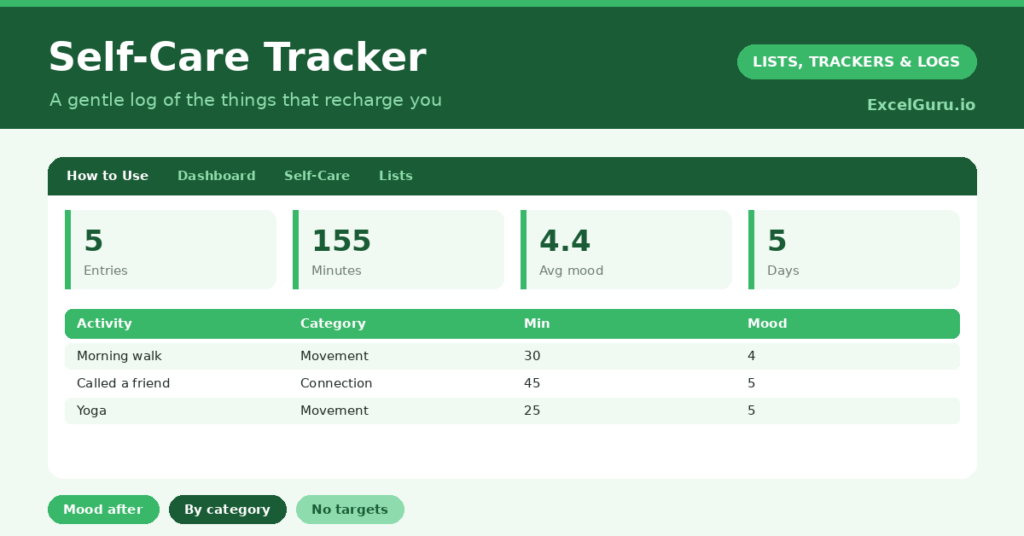
A self-care tracker is a gentle way to notice the small things that genuinely help you feel better. We often forget what recharges us, then wonder why a busy week left us depleted. So a simple, kind record of the activities that lift you can quietly remind you to make room for them.
This free template lets you log each self-care activity and rate how you felt afterwards. So you can gently see what helps you most. As a result, you have a supportive nudge toward balance, with no targets to hit and no pressure to perform.

What does the self-care tracker include?
The template is one gentle log feeding a soft dashboard. Dropdowns keep categories and mood tidy. In short, you get the following:
- A self-care log with the date, activity, category, duration, your mood afterwards and notes.
- Drop-down lists for category and a one-to-five mood rating, so entries stay consistent.
- A category column spanning rest, movement, connection, creativity and mindfulness.
- A notes column for what felt good, in your own words.
- A dashboard showing total entries, this week’s entries, total minutes, your average mood afterwards, distinct activities and days logged.
Which formulas power the self-care tracker?
The dashboard does the gentle totalling for you. A SUM adds up the minutes you have given to self-care, and a SUMPRODUCT counts this week’s entries, so you can see your recent balance.
An AVERAGEIF works out your average mood afterwards, ignoring blank rows, and a SUMPRODUCT counts your distinct activities. So the dashboard offers a soft, encouraging overview rather than a scorecard. There are deliberately no targets and nothing to fail.
Why keep a self-care tracker?
The first benefit is simply noticing. When life gets busy, self-care is the first thing to slip, often without our realising. A gentle record reminds us it matters. So we are more likely to make time for it.
The second benefit is learning what helps. The mood rating quietly shows which activities lift you most, so you can lean into them. The categories encourage a little balance across rest, movement and connection. Furthermore, looking back on a kind week can be genuinely reassuring. In short, the tracker supports your wellbeing without ever turning it into another chore.
What does the dashboard reveal?
The dashboard offers a soft, encouraging snapshot. This week’s entries show whether you have made any time for yourself lately, which is a gentle prompt rather than a judgement. So it nudges without nagging.
The average-mood figure quietly highlights how good these moments make you feel, which is its own encouragement. The distinct-activities count shows the variety in your self-care, and the total minutes show the time you have given yourself. Because there are no targets, the dashboard simply reflects, never pressures. So it stays kind by design.
How do you use it?
Whenever you do something that recharges you, however small, add it with a category and a rough duration. So the little moments get counted. Rate your mood afterwards, which over time reveals what helps you most.
There is no need to do a set amount; the tracker is a mirror, not a target. Glance at the dashboard now and then, especially in a busy spell, as a gentle reminder to look after yourself. Because it is kind by design, it should feel supportive, never like another obligation. In short, log what helps, and let it remind you to do more of it.
How do you customise it?
Edit the categories and activities on the Lists tab to reflect what genuinely recharges you. Additionally, you can add columns for who you were with, the time of day, or a simple energy rating. Some people add a gratitude note alongside each entry. The template adapts to whatever self-care looks like for you, with no right or wrong way to use it.
What mistakes should you avoid?
The first mistake is turning self-care into a competition with yourself. There are no targets here, so resist the urge to chase numbers. The second mistake is only logging the big things, like a whole spa day.
The small moments, a short walk or a good chat, count just as much, so include them. Finally, please remember this is a gentle tool, not a measure of your worth. If tracking ever starts to feel like pressure, it is completely fine to set it aside and simply be kind to yourself in whatever way helps.
Frequently asked questions
Are there targets to hit in the self-care tracker?
No, and that is deliberate. It has no goals or scores to chase. It simply logs what recharges you and how you felt, so you can gently notice what helps rather than feel any pressure.
How does it show what helps me most?
You rate your mood after each activity, and the dashboard averages those ratings. Over time, you can see which kinds of self-care tend to lift you most, and lean toward them.
What if tracking feels like pressure?
Then please set it aside. This is meant to be a kind, supportive tool. If it ever feels like another obligation, simply being kind to yourself in whatever way helps matters far more than any log.
Log the activities that recharge you, note how they make you feel, and let the tracker gently remind you to make time for them. A self-care tracker is not a scorecard; instead, it is a kind, pressure-free way to notice the small things that help, so you can do a little more of what makes you feel well.