
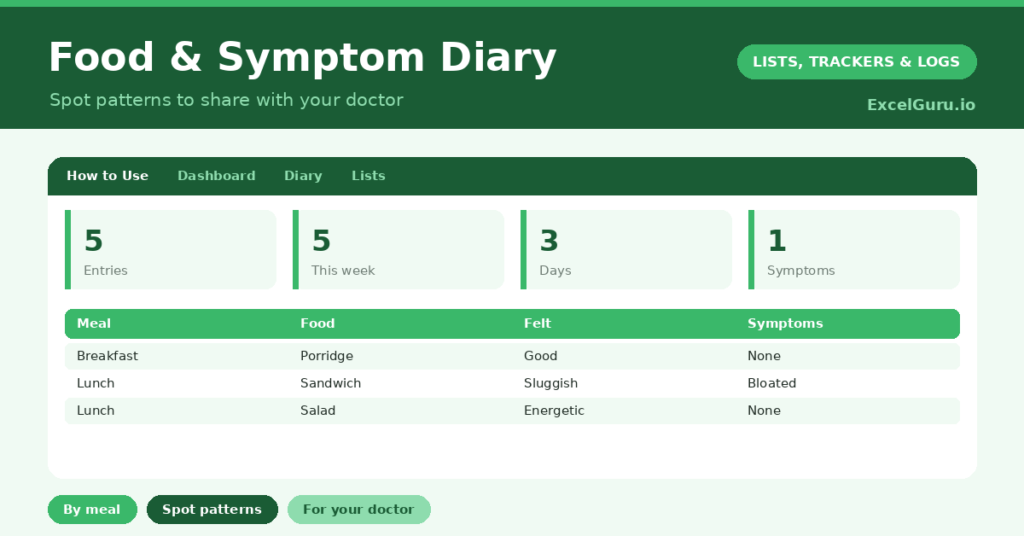
A food diary can be a genuinely useful tool when you are trying to work out why you feel a certain way after eating. Bloating, fatigue or discomfort that comes and goes is very hard to pin down from memory. So writing down what you ate, and how you felt afterwards, gives you and a professional something concrete to look at.
This free template pairs each meal with how you felt and any symptoms. So possible patterns you would never spot day to day can gradually emerge. As a result, you have a calm, organised record to bring to a doctor or dietitian.
This is a personal diary to help you notice patterns and have a clearer conversation with a healthcare professional. It is NOT a diet, weight-loss or calorie-counting tool, and it is not medical advice. If you have ongoing symptoms or any concerns about food, please speak to a doctor or registered dietitian.

What does the food diary include?
The template is one simple diary feeding a gentle dashboard. A dropdown keeps the meals tidy. In short, you get the following:
- A diary with the date, time, meal, food or drink, how you felt, symptoms and notes.
- A dropdown for the meal, so breakfast, lunch, dinner and snacks are easy to filter.
- Free-text columns for how you felt and any symptoms, in your own words.
- A notes column for anything else worth remembering, such as stress or poor sleep.
- A dashboard showing total entries, this week’s entries, days logged, entries noting symptoms, the most recent date and entries logged today.
Which formulas power the food diary?
The dashboard gently summarises your diary without any judgement. A COUNTA totals your entries, and a SUMPRODUCT counts those from the last week, so you can see how complete your recent logging has been.
A neat SUMPRODUCT divided by COUNTIF counts the distinct days you have logged, and another counts the entries where you noted a symptom. So the dashboard offers a simple overview, while the meaningful detail stays in the diary itself, ready to share. It draws no conclusions, by design.
Why keep a food diary?
The first reason is better conversations with a professional. A dietitian or doctor can work far more effectively from a real record than from “I think bread sometimes bothers me”. So the diary makes your appointment more productive.
The second reason is spotting possible links. Over time, pairing meals with how you felt may reveal patterns worth exploring, such as discomfort after certain foods. So you have something specific to investigate, with guidance. Writing things down can also ease the worry of trying to hold it all in your head. In short, the diary supports a calmer, more informed approach, alongside professional advice.
What does the dashboard reveal?
The dashboard gives a quiet, factual overview rather than any verdict. The days-logged figure shows how consistent your record has been, which matters for spotting patterns. This week’s entries keep it current.
The entries-noting-symptoms figure simply shows how often you flagged something, without interpreting it. The most-recent date confirms the diary is up to date. These figures are there to support a conversation with a professional, not to draw conclusions on their own. So the dashboard stays gentle and purely descriptive.
How do you use it?
Log each meal soon after you eat, while it is fresh. So the record stays accurate. Note what you had in your own words, and afterwards jot down how you felt and any symptoms.
Add a note about anything else relevant, such as a stressful day or a poor night’s sleep, since those affect how we feel too. Then, when you see a professional, bring the diary so they can see the full picture. Because the record builds over time, patterns become easier to discuss. In short, a few seconds per meal gives you a far clearer story to share.
How do you customise it?
Edit the meal options and the sample feelings on the Lists tab to suit you. Additionally, you can add columns for the time you woke, your hydration, or your energy on a simple scale. A column for where you ate can sometimes be revealing. The template adapts to a short two-week record before an appointment or an ongoing diary, entirely as you and your professional prefer.
What mistakes should you avoid?
The first mistake is using the diary to self-diagnose or to cut out foods on a hunch. So treat it as a record to discuss with a professional, not a basis for big dietary changes on your own. The second mistake is only logging the meals you suspect, which gives an incomplete picture.
Record the ordinary meals too, so any pattern is honest. Finally, please do not let tracking become a source of stress or an unhealthy focus on food. If logging ever feels that way, it is completely fine to stop, and to reach out to a doctor, dietitian or someone you trust. Your wellbeing matters most.
Frequently asked questions
Is the food diary a diet or calorie tool?
No. It deliberately does not track calories, weight or portions as numbers. It is a simple record pairing meals with how you felt, designed to help you and a professional spot patterns, not to manage a diet.
Can it diagnose a food intolerance?
No. It can help you and a doctor or dietitian notice possible patterns, but only a qualified professional can investigate and diagnose. Always take any concerns to them rather than acting on the diary alone.
How long should I keep it?
Whatever suits you and your professional. Many people keep it for a couple of weeks before an appointment. If logging ever feels stressful or unhealthy, it is fine to pause and seek support.
Log your meals, note how you felt, and bring the record to your appointments. A food diary cannot diagnose anything, and it is not a diet tool or a replacement for professional care, but it can help you and a dietitian or doctor have a clearer, more useful conversation about how food affects you.